World Population Growth | OurWorldInData.org

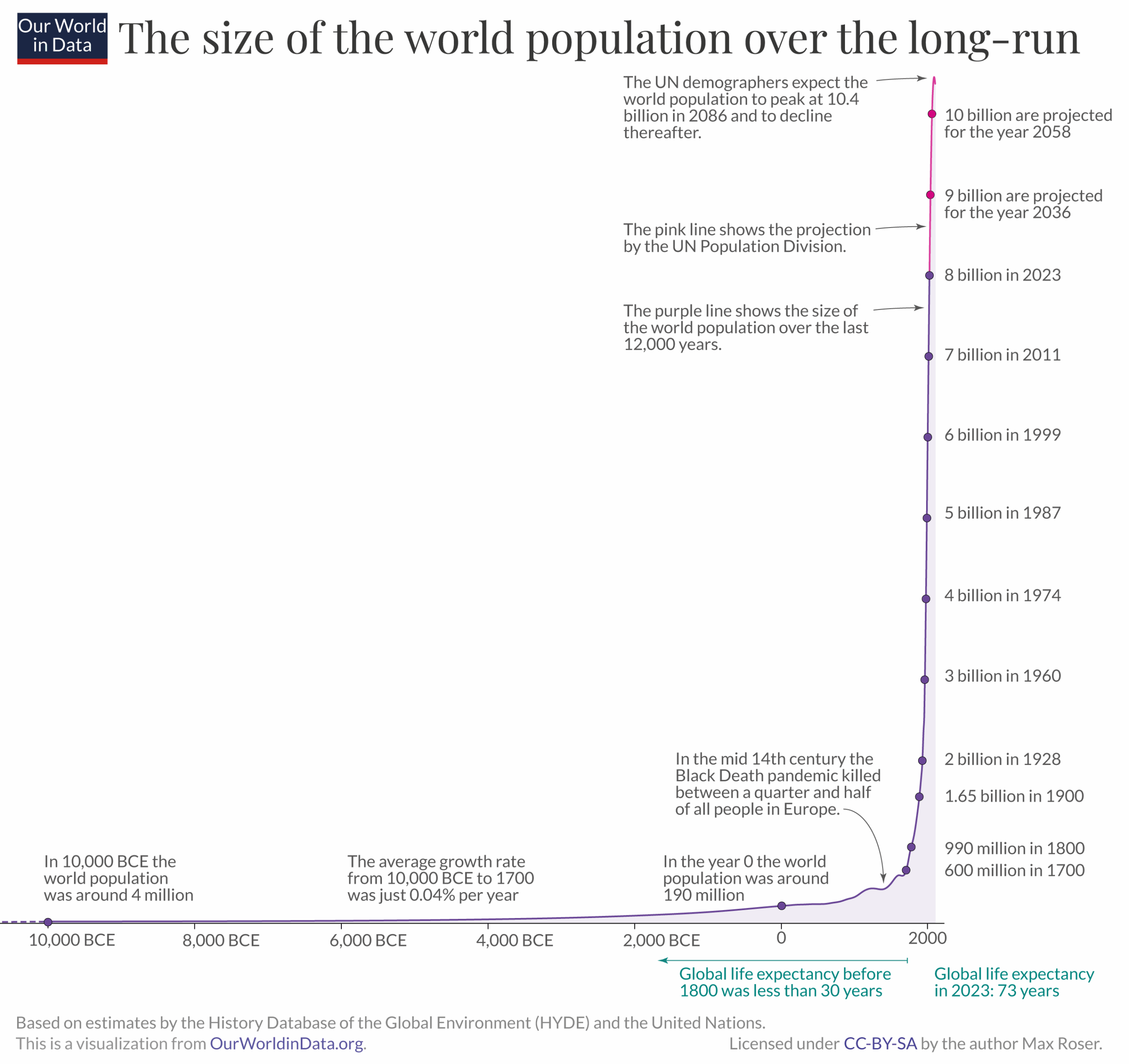
The world population has changed dramatically over the last few centuries. Let’s examine long-run population data to understand this change and how quickly the world’s population is growing today.
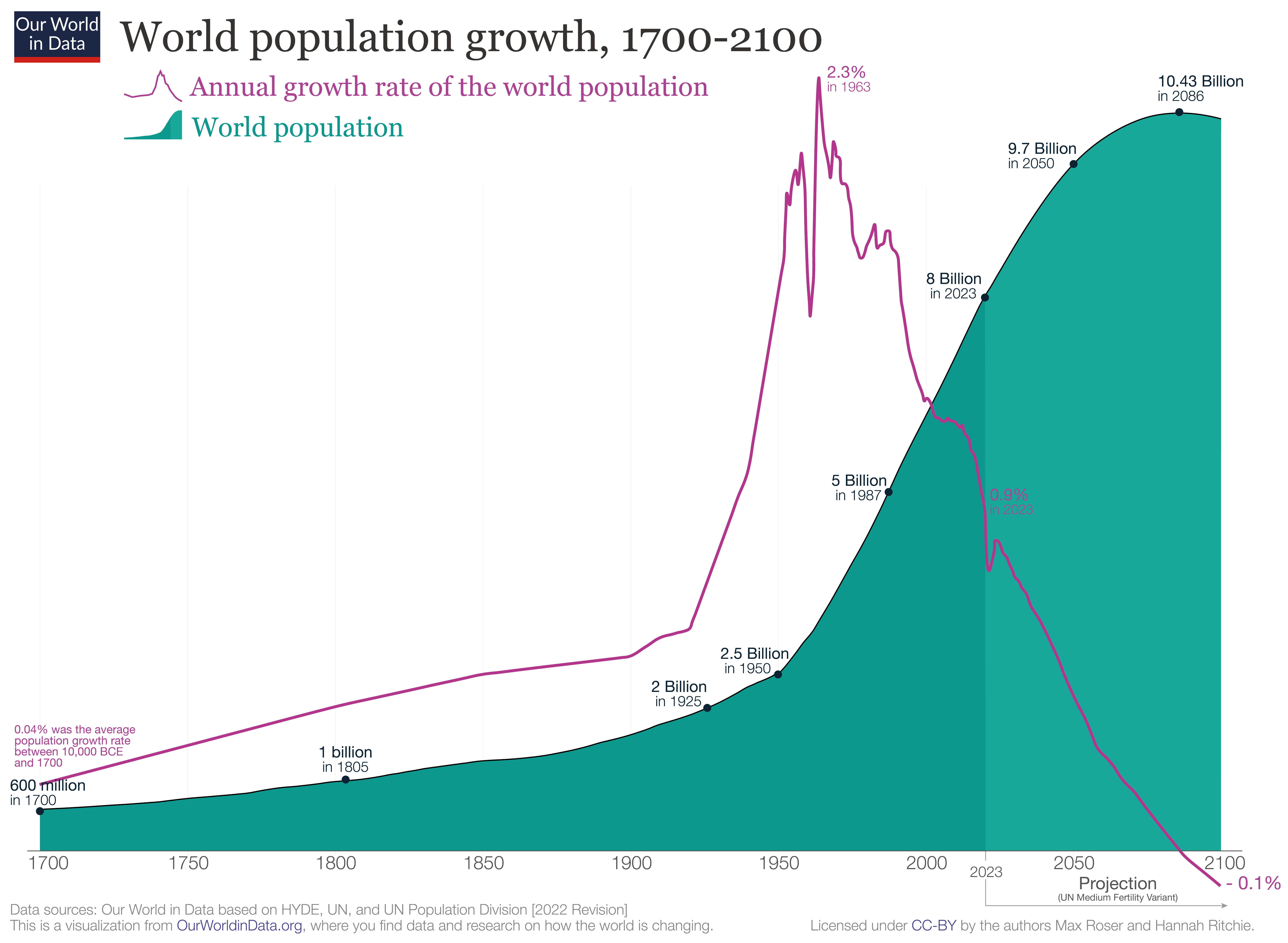
The global population growth rate peaked long ago. The chart shows that global population growth peaked in 1962 and 1963 with an annual growth rate of 2.2%; however, since then, world population growth has halved.

For the last half-century, the population growth rate has been declining. The UN projects that this decline will continue in the coming decades.

A common question we’re asked is: is the global population growing exponentially? The answer is no.
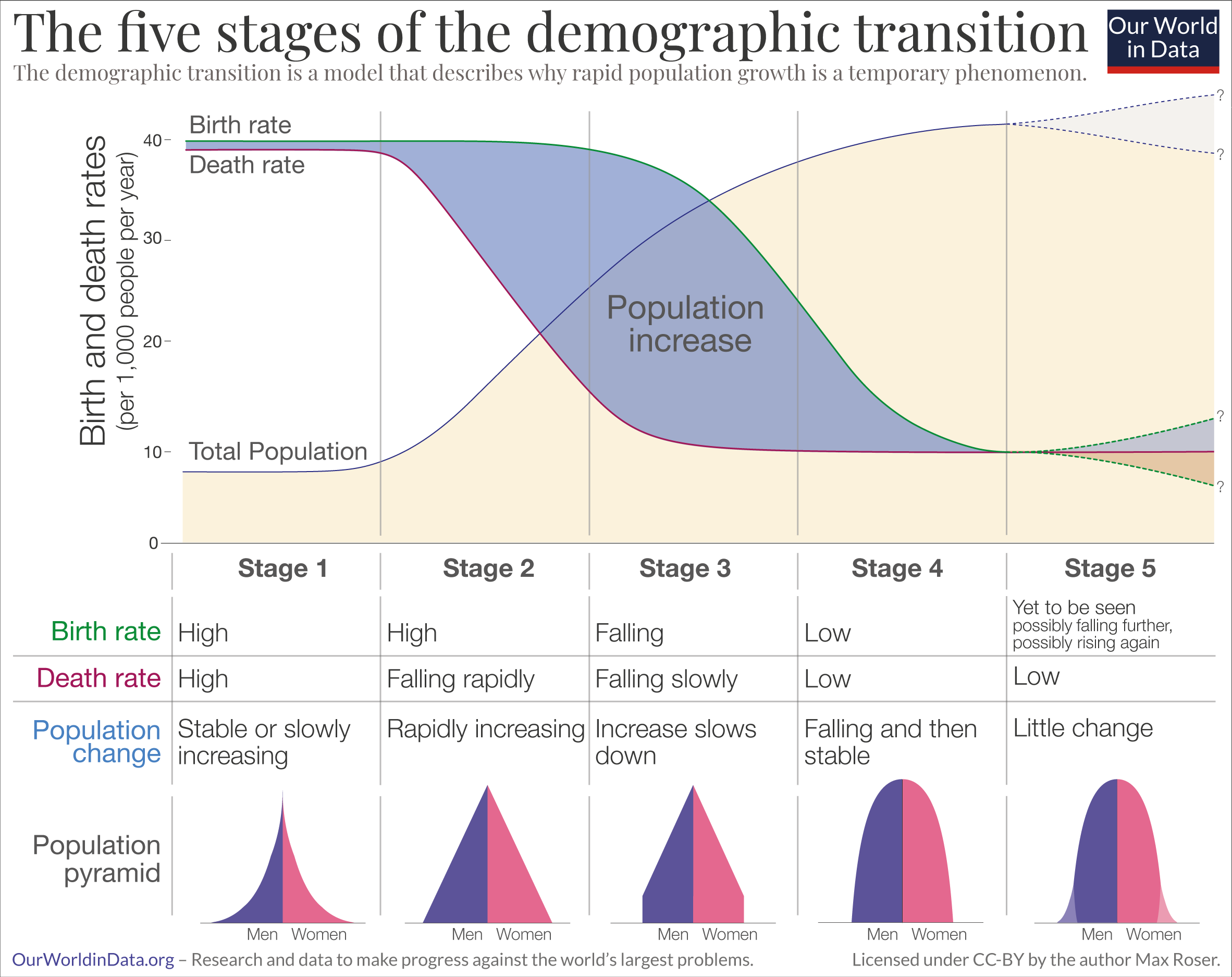
Population growth is determined by births and deaths. Every country has seen very substantial changes in both: mortality and fertility rates have fallen across the world.

However, declining mortality rates and declining fertility rates alone do not explain why populations grow. If these changes happened at the same time, the size of the population would not increase. What is crucial is the timing at which mortality and fertility change.

The model that explains why countries go through a period of rapid population growth is called the ‘demographic transition’. It is shown in the schematic figure. It is a beautifully simple model that describes the observed pattern in countries worldwide and is one of the great insights of demography.
Source 1: https://ourworldindata.org/population-growth-over-time
Source 2: https://ourworldindata.org/demographic-transition

Petite Histoire de Responsabilité


C’est l’histoire de quatre individus : Chacun, Quelqu’un, Quiconque et Personne.

Un travail important devait être fait, et on avait demandé à Chacun de s’en occuper :

  • Chacun était assuré que Quelqu’un allait le faire.
  • Quelqu’un s’est emporté parce qu’il considérait que ce travail était la responsabilité de Chacun.
  • Chacun croyait que Quiconque pouvait le faire, mais Personne ne s’était rendu compte que Chacun ne le ferait pas.

À la fin, Chacun blâmait Quelqu’un, du fait que Personne n’avait fait ce que Quiconque aurait dû faire.

Brooks’ Law | Bigger Teams, Bigger Problems?

When a project falls behind schedule, the knee-jerk reaction is often to add more people to the team. But does this actually help? According to Brooks’ Law, the answer is a resounding no. In fact, it might make things worse.

📉 𝐁𝐫𝐨𝐨𝐤𝐬’ 𝐋𝐚𝐰 𝐢𝐧 𝐚 𝐍𝐮𝐭𝐬𝐡𝐞𝐥𝐥
“Adding manpower to a late project makes it later.”
More people = more complexity, not more progress.

💡 𝐖𝐡𝐲 𝐁𝐢𝐠𝐠𝐞𝐫 𝐓𝐞𝐚𝐦𝐬 𝐁𝐚𝐜𝐤𝐟𝐢𝐫𝐞
● 𝐑𝐚𝐦𝐩-𝐔𝐩 𝐓𝐢𝐦𝐞: New team members need time to get up to speed, pulling focus and resources away from the project.
● 𝐂𝐨𝐦𝐦𝐮𝐧𝐢𝐜𝐚𝐭𝐢𝐨𝐧 𝐎𝐯𝐞𝐫𝐥𝐨𝐚𝐝: More people mean more meetings, emails, and misaligned priorities. Coordination becomes a bottleneck.
● 𝐃𝐢𝐦𝐢𝐧𝐢𝐬𝐡𝐢𝐧𝐠 𝐑𝐞𝐭𝐮𝐫𝐧𝐬: Not all tasks can be easily divided, and adding more hands can lead to duplicated efforts or confusion.

🔑 𝐇𝐨𝐰 𝐭𝐨 𝐀𝐯𝐨𝐢𝐝 𝐭𝐡𝐞 𝐏𝐢𝐭𝐟𝐚𝐥𝐥𝐬
● 𝐒𝐭𝐢𝐜𝐤 𝐭𝐨 𝐒𝐦𝐚𝐥𝐥𝐞𝐫, 𝐒𝐤𝐢𝐥𝐥𝐞𝐝 𝐓𝐞𝐚𝐦𝐬: Focus on quality over quantity. A smaller, highly skilled team can often outperform a larger, less cohesive one.
● 𝐒𝐭𝐫𝐞𝐚𝐦𝐥𝐢𝐧𝐞 𝐂𝐨𝐦𝐦𝐮𝐧𝐢𝐜𝐚𝐭𝐢𝐨𝐧: Use tools and processes that minimize friction and keep everyone aligned.
● 𝐀𝐝𝐝𝐫𝐞𝐬𝐬 𝐑𝐨𝐨𝐭 𝐂𝐚𝐮𝐬𝐞𝐬: Instead of adding people, identify and fix the underlying issues causing delays.
● 𝐏𝐥𝐚𝐧 𝐟𝐨𝐫 𝐑𝐞𝐚𝐥𝐢𝐬𝐭𝐢𝐜 𝐓𝐢𝐦𝐞𝐥𝐢𝐧𝐞𝐬: Avoid overpromising and set achievable goals from the start.

🌟 𝐓𝐡𝐞 𝐁𝐢𝐠 𝐓𝐚𝐤𝐞𝐚𝐰𝐚𝐲: More people ≠ More productivity. The right team size matters!

WordPress | Baskerville 2 by Anders Noren.

Up ↑